

From Dreamer to Doer
There is a notebook in your house with eleven first pages in it. Eleven beginnings, each one written in slightly better handwriting than the last, each one abandoned by page three.
Somewhere there is a domain name you bought at 1 am for 799 rupees, renewed twice out of guilt, still pointing at nothing.
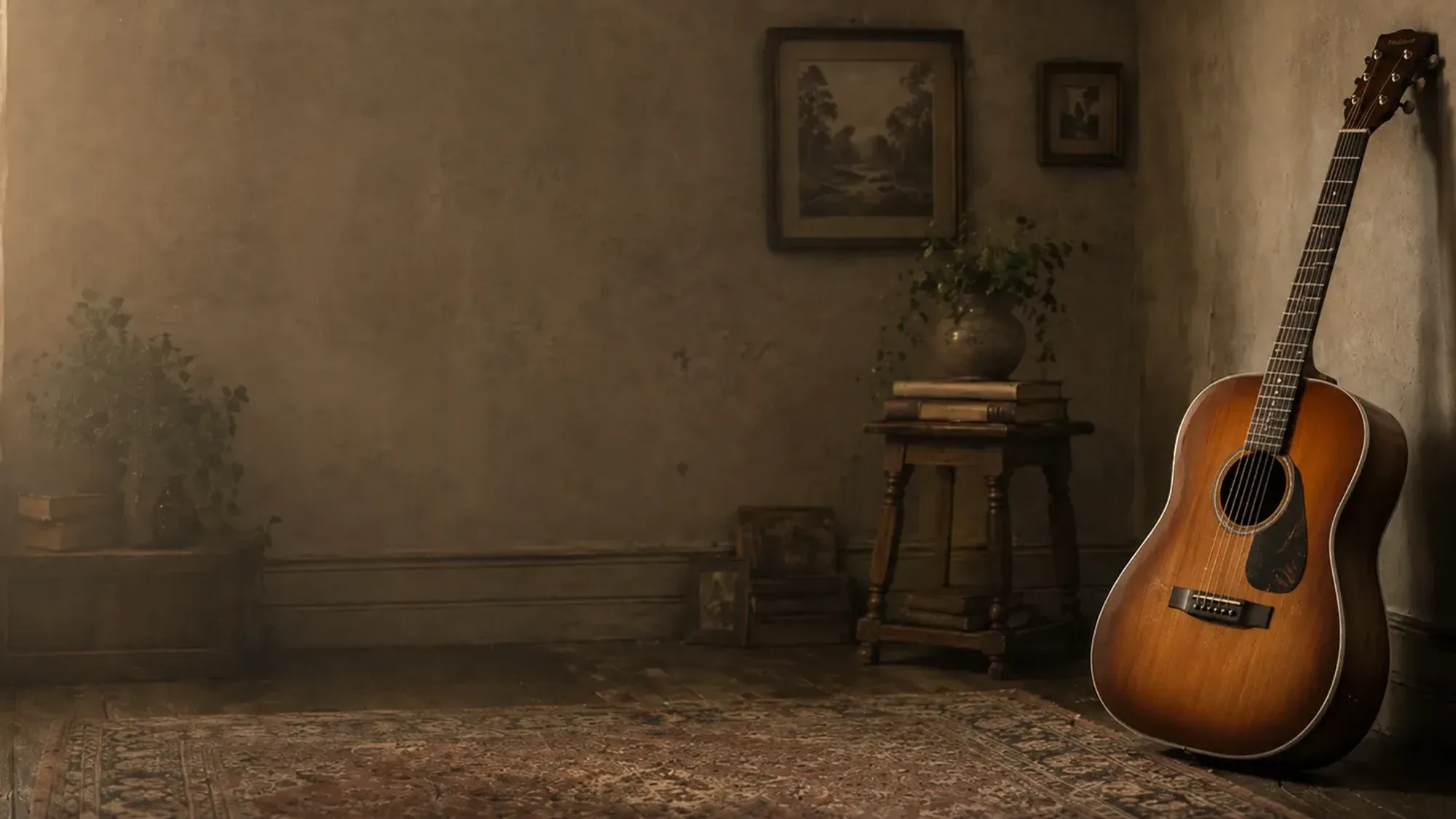
There is a guitar in the corner of a room. Three chords live on it. G, C and D, learned in a fortnight, and then the strings went dull and the case became a place to put clothes.
Most people I meet have a cupboard like this. Half-written novels, half-built businesses, gym memberships taken in January and mourned by March, a diploma course paid for in full and watched up to lesson four. Open that cupboard and look honestly at what is in there, and you notice something odd about all of it. Every single one of those things got started. Beginning was not the problem.

So You Began. Now What?

A few years ago Dinesh and I wrote a piece called Procrastination and How to Beat It. That one was about getting off the sofa. Why the mind stalls, why perfectionism is such an expensive habit, why you have full permission to do a bad job, and the small mercy that three pages or ten minutes a day is enough to begin with. A waterfall, we said, is only a great many drops that kept falling.
Good. You began. You wrote your three pages, you did your ten minutes, the drops have started falling.
This article is about the two years after that.
There is a gap between a person who has ideas and a person who has finished things, and it is a wide, unglamorous, largely unphotographed gap. Most people spend their entire lives inside it. You cannot call them lazy. They are busy the whole time, starting.
A Dream With No Edges Is a Daydream
"I want to write a book" is a mood. It feels lovely. You can carry it around for a decade.
"40,000 words, 500 words a day, first draft done by March" is a project. It has a size, a shape and a date, and now it can be worked on and, more importantly, it can be failed at in a measurable way.
So do the conversion, on paper, with real numbers. How big is the thing, in words or in kilos or in customers or in minutes of video? How much of it can you produce in one working session? Divide. You now have a number of days. Add 40 per cent because you are optimistic, as all of us are, and put a date on a calendar where you will actually see it.
Then make the first version smaller than your ego would like. Our first book was not the book we imagined at the start. It was thinner, plainer and it went out anyway. The iPhone 13 exists because the iPhone 1 shipped, and the iPhone 1 could not copy and paste text. If Apple had waited for copy and paste, we would all still be on Nokias, which, to be fair, had superior battery life and an unbeatable game about a snake.
Mary Poppins was right that well begun is half done. She was also being generous. She left out the other half, which involves no umbrella, no singing, and a fair amount of sitting at a desk on a Friday afternoon when you would rather be flying kites (if you know, you know).
The Boring Middle, Where Dreams Die
The middle of a project has nothing going for it.
The novelty has worn off. The finish line is not visible. Nobody is clapping, because nobody knows you are doing it, and the people who do know have stopped asking. Chapter nine of a twenty-chapter book, Month five of a business that has not yet made money, Week seven of learning the piano, when your hands can do a little but not enough to enjoy themselves, are all wasteland.
And this is precisely the moment your mind starts shopping.
A brand new idea arrives, fully formed, gleaming, obviously better than the tired thing on your desk. The mind will keep producing these. A new dream feels wonderful, because at the idea stage a project has no problems at all, only possibilities. An old draft has problems on every page. The excitement of the new idea is largely a chemical event happening in your head, and it will happen again next month about something else, and the month after that. It is not a message from the universe telling you to switch.
So here is the rule and its limit. Honour the appointment. Do not wait for the mood.
What that looks like in practice, concretely:
- A fixed slot of 20 to 40 minutes, at the same time every day. Same time matters more than length. The body starts turning up before the mind agrees.
- A visible count. A wall calendar, a cross for every day you sat down. Not a streak to be defended, just evidence. On a bad week the crosses are the only thing that tells you the truth about how much you have actually done.
- One project at a time. Write the shiny new ideas in a list, treat that list as a waiting room, and open nothing new until the current thing has left the building.
- Work on the ugly part first in each session. The bits you are avoiding are the bits the project is stuck behind. Like when I was building this website, the first thing I finished making were the legal pages. The most boring part of the website, where no one ever goes, except for Razorpay.
You will miss days. You will miss a whole week, possibly over a wedding in Jaipur. The work is not ruined. Simply sit down again the next day and carry on from wherever you were. Tomorrow is always there. Just don’t take it for granted.
Why Your Head Goes Quiet When You Sit Down to Work
Have you noticed how urgently clean the kitchen needs to be, exactly at the moment you sit down to do difficult work?
The monster in the head does not only show up as fear before you start. Mid-project it wears milder clothes. Boredom. Restlessness. A sudden deep interest in other people's opinions on the internet. A conviction that you need to do more research before you can proceed, which happens to be the most respectable form of running away ever invented.
This is where meditation makes a difference. A mind that has been trained to sit for 20 minutes with dullness, with an itch, with a thought that will not stop repeating, can also sit with a dull chore for 40. You are building the same capacity in both places. Boredom stops being an emergency. It becomes weather.
I did a Master's in mathematics at IIT Bombay, and mathematics gave me a useful education in unglamorous work long before I taught a single course. You sit with one problem for hours. Nothing happens. You sit again the next day. Nothing happens. Then something moves. Nobody watches you do this and no part of it feels inspired while it is going on. All that happens much later.
Decades later I still do this, most of what keeps me going is entirely ordinary, and the ordinariness is the point.
The other thing that happens in the middle: people try to buy stamina. Extra coffee at 4 pm, an hour stolen from the night, a Sunday sacrificed, and for about ten days it works beautifully. Then the work gets worse without you noticing, because a sleep-deprived person almost never realises he is sleep deprived. Give yourself an 8-hour sleep opportunity. Finish dinner three hours before bed. Black out the bedroom. Your project needs a functioning brain far more than it needs an extra 45 minutes at midnight.
The Last Ten Percent Costs Ninety

The end of a project takes a disproportionate amount of time. Ninety per cent done, three weeks left, and somehow it eats six months.
Part of that is real work. The rest is perfectionism, the same villain from part one, back in better clothes. Now it looks like diligence. You are polishing. You are refining the introduction for the ninth time. You are choosing between two shades of blue that no human being will ever consciously see. Underneath that careful behaviour is the plain fear of being judged on a thing that is actually finished, because an unfinished thing can never be criticised. It is still full of promise.
What works:
- Write down everything that remains as small named tasks. Not "finish website". Instead, "write the About page, 300 words" and "fix the contact form". Vague remaining work expands forever.
- Clear one of them a day. Only one, if that is what the day allows.
- Against each task ask whether a reader, a customer or a listener would notice if it were left undone. Most of them would not. Cut those.
- Put a hard date on it and let the thing be imperfect on that date.
Everyone who has published anything knows the particular shame of seeing its flaws afterwards. I have opened our own books and winced at a paragraph. That wince is the tax on shipping, and it is a cheap tax. A finished imperfect thing does work in the world. A perfect imaginary one sits in a cupboard with the guitar.
You Become the Kind of Person Who Ships
Something changes in you the first time you finish something and hand it over.
It has very little to do with the size of the thing. A 4,000 word ebook nobody buys will do it. A small event you organised for 30 people will do it. What changes is the sentence running in your head. "I have a great idea" becomes "I made a thing, and I can make another one." You now have evidence about yourself rather than hopes about yourself.
An Art of Living course could change your life, or it could leave you exactly as you are, with a pleasant memory. Ideas behave the same way.
So go and open your cupboard. Pick the smallest dream in there, the one you are almost embarrassed by. Give it a size and a date. Sit with it for 20 minutes today evening, and the morning after, and finish it badly.
You have stopped being a dreamer. You are now a doer!
More from us
We teach Art of Living programmes across India and online, and the dates are on our schedule. Come and learn to meditate and breathe with us. Between us we have been at this for 35+ years and have taught over 250,000+ people, and we still look forward to every course.
Our videos go up on YouTube at @bawadinesh99. Subscribe and boop that bell button, otherwise the algorithm decides what you see and it has terrible taste.
There is a membership on the channel as well. Members get longer talks and live sessions that we keep just for them, which is the closest we can get to sitting in a room with you when we are nowhere near your city.
Joining is a small thing at your end and a large one at ours. Thank you for whichever bit of this you say yes to.
New kids on the blog
All posts
Recipes
My Vegan Open Sandwich On Sourdough
Seven bowls in the fridge, made across different days, none of them meant for each other. A friend in a hurry to catch a flight, and five minutes of actual work between those bowls and a plate he sat down for. Onion jam, pesto, cashew cheese, all of it from scratch.

Recipes
A Salad and a Story
How to buy leaves so they don't turn slimy by Thursday, wash them in still water instead of under the tap, and mix a dressing at three parts oil to one part acid. Also the day Gurudev put a big bowl of salad in front of me.

Recipes
Which country are your tomatoes going to?
Two soups from the same bowl of garden tomatoes, one with garlic in olive oil and one with jeera in ghee, both written out properly. Also why the second one has you yawning by half past ten, and why fifteen minutes at the stove settles the mind better than fifteen on a phone.


Join the conversation
Your first comment is read before it appears. After that yours go up straight away. Your email is never published.